
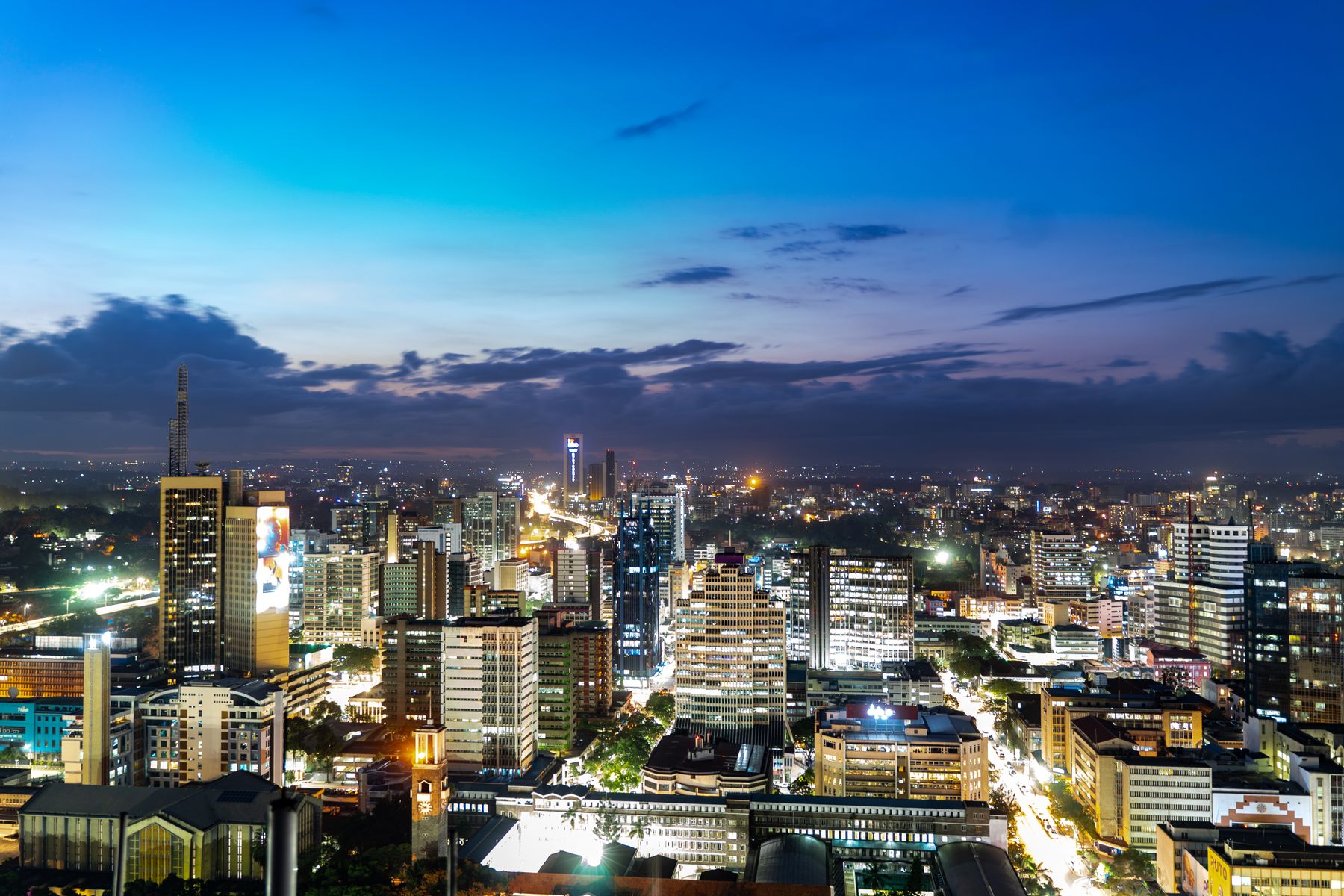
Start at the law courts and walk down to Kenyatta Avenue
Begin around 8am at the Milimani law courts end of the CBD, where the streets are still quiet and the air is cool. From the Supreme Court buildings on City Hall Way, walk south-east onto Kenyatta Avenue and follow it towards the central roundabout. This stretch gives you the district's architectural range in twenty minutes: colonial-era stone facades, the modernist towers along Wabera Street, and the constant flow of matatus and taxis around Kencom bus station. Carry small notes for matatu fares and keep your bag zipped in the morning rush.
Kenyatta Avenue is the natural spine of the day, and almost everything worth seeing sits within a fifteen-minute walk of it. If you are staying outside the centre, arrive by taxi or matatu to Kencom and start there rather than fighting traffic into the middle. Mornings are noticeably calmer than the 5pm crawl along Moi Avenue and Haile Selassie Avenue, when the whole district seems to be leaving at once. Weekdays give you the full working-city atmosphere; Sundays are quiet to the point of feeling deserted.
Mid-morning: the markets, the mosque and the streets around Moi Avenue
From Kencom, head north up Moi Avenue to the 1920s Jeevanjee Gardens, a small green square with benches that makes a sensible rest stop. Continue to the City Market on Muindi Mbingu Street, where produce, flowers and craft stalls sit under one roof; it is busier and better value in the morning. A short walk east along Banda Street brings you to the Jamia Mosque, whose silver domes are among the district's most photographed landmarks. Dress respectfully if you look in, and note that non-Muslim visitors are generally welcome outside prayer times.
The blocks between Muindi Mbingu, Biashara Street and Kimathi Street are the most interesting for wandering: tailors, fabric shops, book stalls and small cafes packed into narrow frontages. This is where a day in the CBD stops feeling like a checklist and starts being enjoyable. Allow an hour and a half here, including a coffee. If you want a sit-down lunch rather than a snack, the streets around Kimathi Street and Standard Street have the widest choice, and hotel restaurants in the area are reliable if unexciting.
Afternoon: the railway museum, Nyayo House and the view from the towers
After lunch, walk south-west along Haile Selassie Avenue to the Nairobi Railway Museum, just past the main station. The collection of locomotives and carriages from the East African railway's history takes around an hour, and the grounds are calm compared with the surrounding roads. From there, the walk back towards Nyayo House on Harambee Avenue passes the Central Bank and the older government quarter — heavy on security barriers, but architecturally worth the detour. Keep your camera out only where it is clearly fine to do so.
If you want a high view of the district, several of the larger hotels and office towers have upper-floor bars and restaurants open to non-residents; ask at reception rather than assuming. Sunset, around 6.30pm year-round, is the best time, and the short dusk means you should plan to be back on Kenyatta Avenue or heading to your hotel by 7pm. Distances across the CBD are short — fifteen to twenty minutes on foot end to end — but allow extra time for traffic if you are crossing to Upper Hill or Westlands.
Where to stay, and what to skip
For a single CBD day, I would book a hotel within walking distance of Kenyatta Avenue or Kimathi Street rather than somewhere in Westlands or Upper Hill. Mid-range international and local chains cluster around these streets, with rates typically higher on weekdays when business travellers fill them and lower at weekends. Budget guesthouses sit closer to the River Road and Ngara side, cheaper but noisier and less convenient in the evening. Check that your shortlisted hotel has secure parking and a working generator before you commit.
Skip the guided city tours that bundle the CBD with a drive to the Nairobi National Park in one morning; you will see neither properly. Also skip trying to cover Westlands, Karen and the CBD on the same day — the drive times make it pointless. The one out-of-district detour worth considering is the Nairobi National Museum on Museum Hill, about ten minutes by taxi from the centre, if you have a second morning. Otherwise, the CBD rewards a slow, single day on foot.
Questions, answered
Is central Nairobi walkable for a day?
Yes, within the CBD itself. Most sights between the law courts, Kenyatta Avenue and the railway museum are within a twenty-minute walk. Use taxis or ride-hailing for the museum and after dark, and avoid walking with a phone out in crowded bus-station areas.
When is the best month to visit Nairobi?
January to March and July to October are the driest and most comfortable for walking. April and May bring heavy afternoon rain, which makes street-level exploring less pleasant. Temperatures stay mild year-round because of the altitude, so pack a light layer for mornings.
Should I stay in the CBD or elsewhere in Nairobi?
For a one-day city visit, stay in the CBD near Kenyatta Avenue or Kimathi Street and walk. For longer trips mixing city and wildlife, split your stay: a night or two centrally, then somewhere quieter on the city's edge with easier access to the national park.
Doing good is the business: every booking through Stay Nairobi funds one verified tonne of carbon removal — same room, same price, no markup.
Start your search